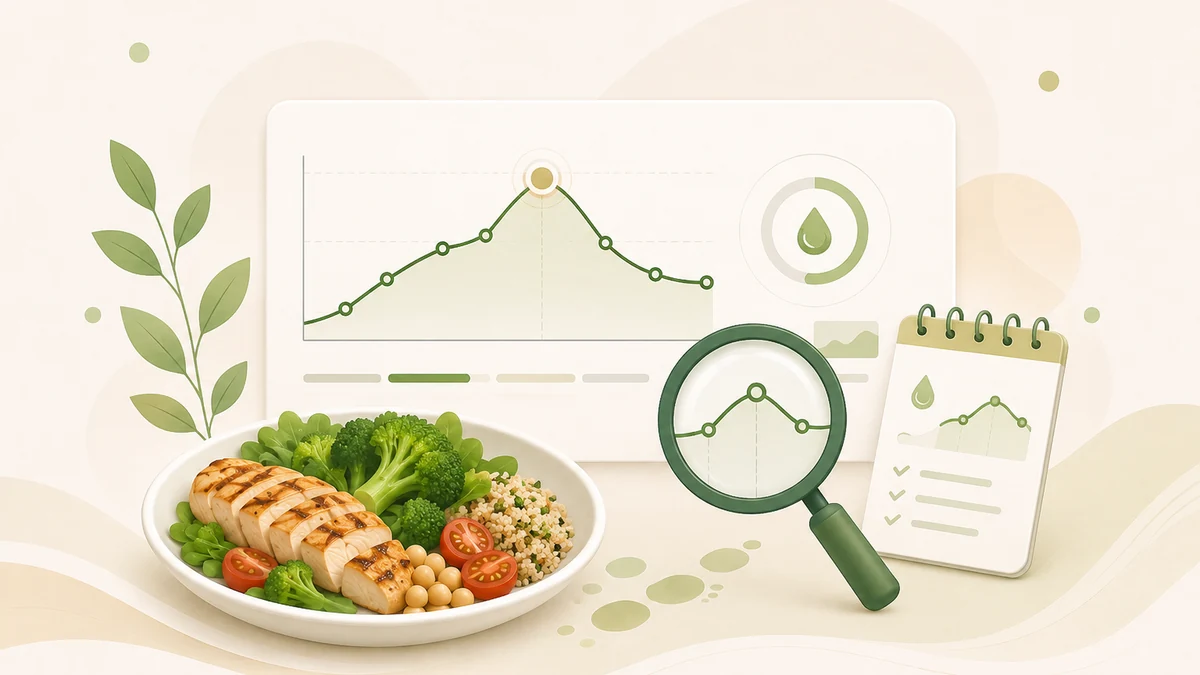
On 27 June 2026 the notes record two spaghetti ice creams, one small ice cream, a protein shake, 70 g of carbohydrate and a 30-minute Prodigy ride. The curve reflects the combined sequence; it cannot separate food from exercise.
The sequence
Only about 14 minutes separated the meal note and the start of the ride. The glucose reading had already moved from about 132 to 117 mg/dl. It then reached 110 mg/dl before rising to 165 mg/dl. This does not prove that the ride “failed”. It shows how food absorption and an early workout overlap.
What I take from it
Exercise is not a mathematical cancellation of carbohydrate. Gut absorption, muscle uptake, stress hormones and liver glucose output can occur at the same time. Future repeats need a documented portion, start time, starting value, ride duration and at least three hours of follow-up.
Limits
One day, no control condition, no standardised portion and the lag inherent in CGM: this is a personal case report, not advice.
Sources and methodological context
- American Diabetes Association, Standards of Care in Diabetes—2026: Physical activity and exercise
- Trefts et al., Exercise and the Regulation of Hepatic Metabolism
- Bergenstal et al., Glucose Management Indicator (GMI)
- Zaharieva et al., CGM lag during aerobic exercise
- Emhoff et al., Gluconeogenesis and hepatic glycogenolysis during exercise
The values in this article come from my own sensor (FreeStyle Libre 3) and are a single-case observation (n = 1) – they show a pattern in me, not a rule for you. Every statement is labelled as established, plausible or open, and proximity in time never counts as proof of a cause. How I handle time windows, sensor lag, influencing factors and approval is collected on one page. Read the methodology