What this is about
After the two iced coffee flavours, this is the third More shake in the test series — this time from the Milkshake Style line, flavour Strawberry Yoghurt Split. Two things made it interesting to us: it comes without caffeine, and for the first time in this series it could be measured in the evening and without training. That makes it the methodologically cleanest measurement I have on any of these shakes so far.
The nutritional values
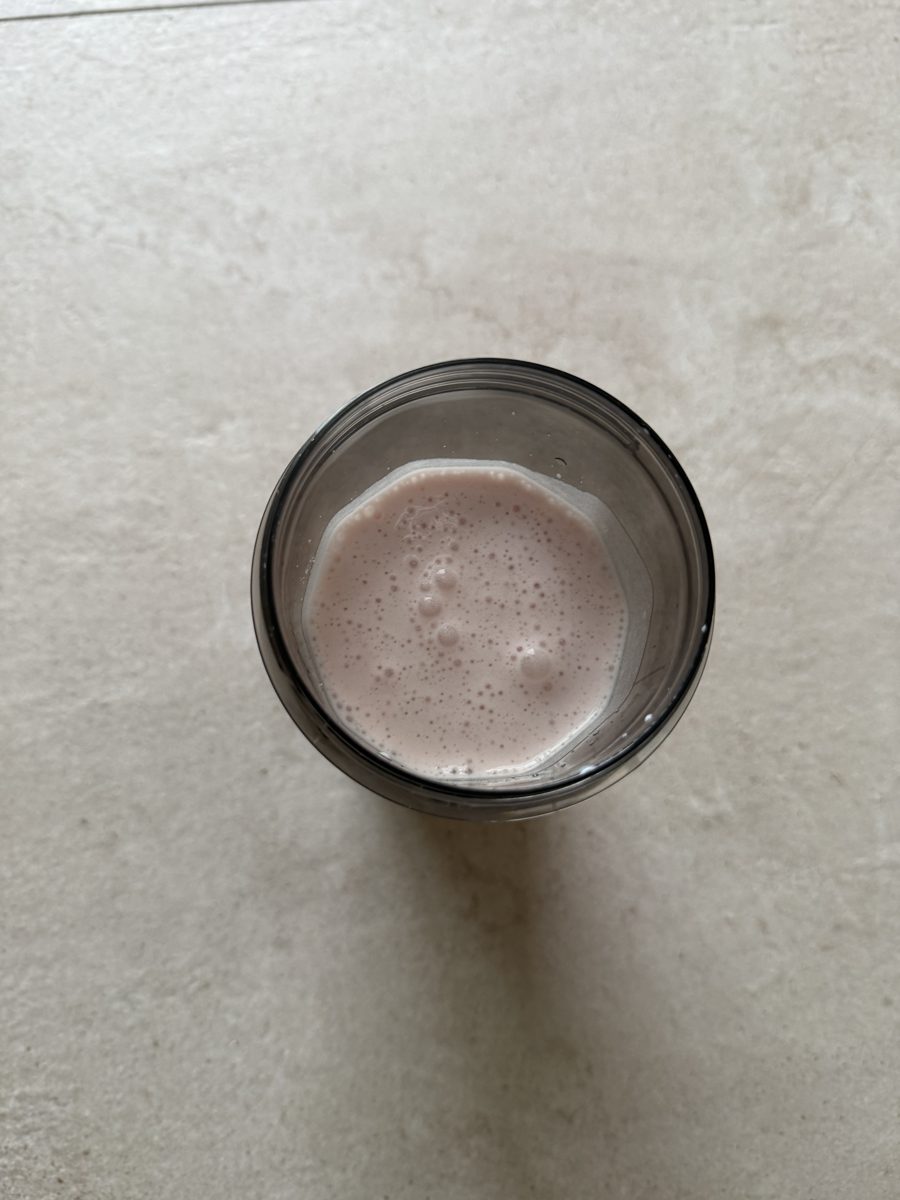
Read off the label, not estimated.
| Nutrient | per 100 g powder | per portion (30 g + 300 ml almond drink) |
|---|---|---|
| Energy | 1583 kJ / 378 kcal | around 141 kcal |
| Fat | 3.6 g | ~1.1 g |
| of which saturates | 2.0 g | ~0.6 g |
| Carbohydrates | 7.1 g | ~2.1 g |
| of which sugars | 4.4 g | ~1.3 g |
| Fibre | 0 g | 0 g |
| Protein | 80 g | ~24 g |
| Salt | 0.58 g | ~0.17 g |
The per-portion figures refer to preparation with unsweetened almond drink, as the manufacturer recommends on the tub. One tub holds 20 portions.
The protein content stands out: 80 g per 100 g of powder is the highest value among the three flavours tested. On carbohydrates, at around 2 g per portion, this shake sits even below the marshmallow iced coffee.
How it tasted
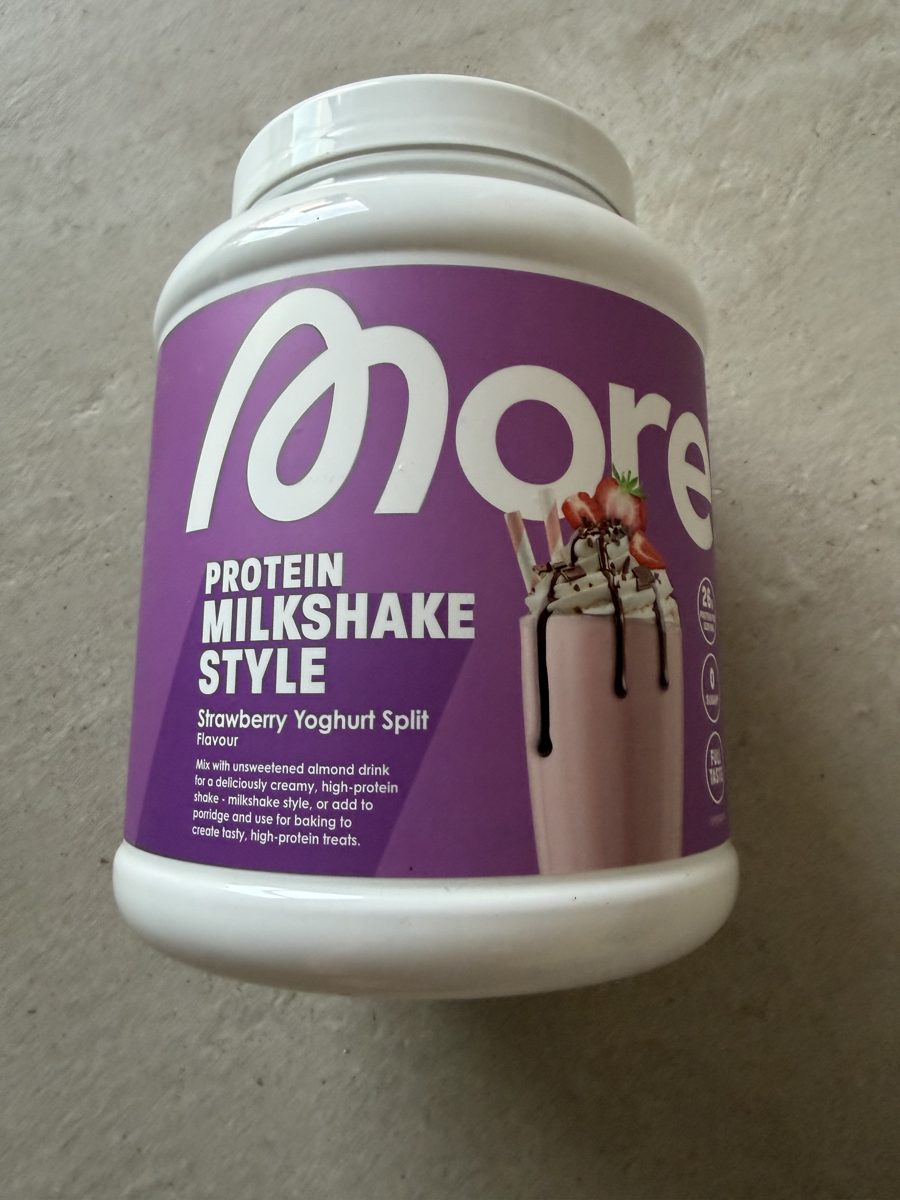
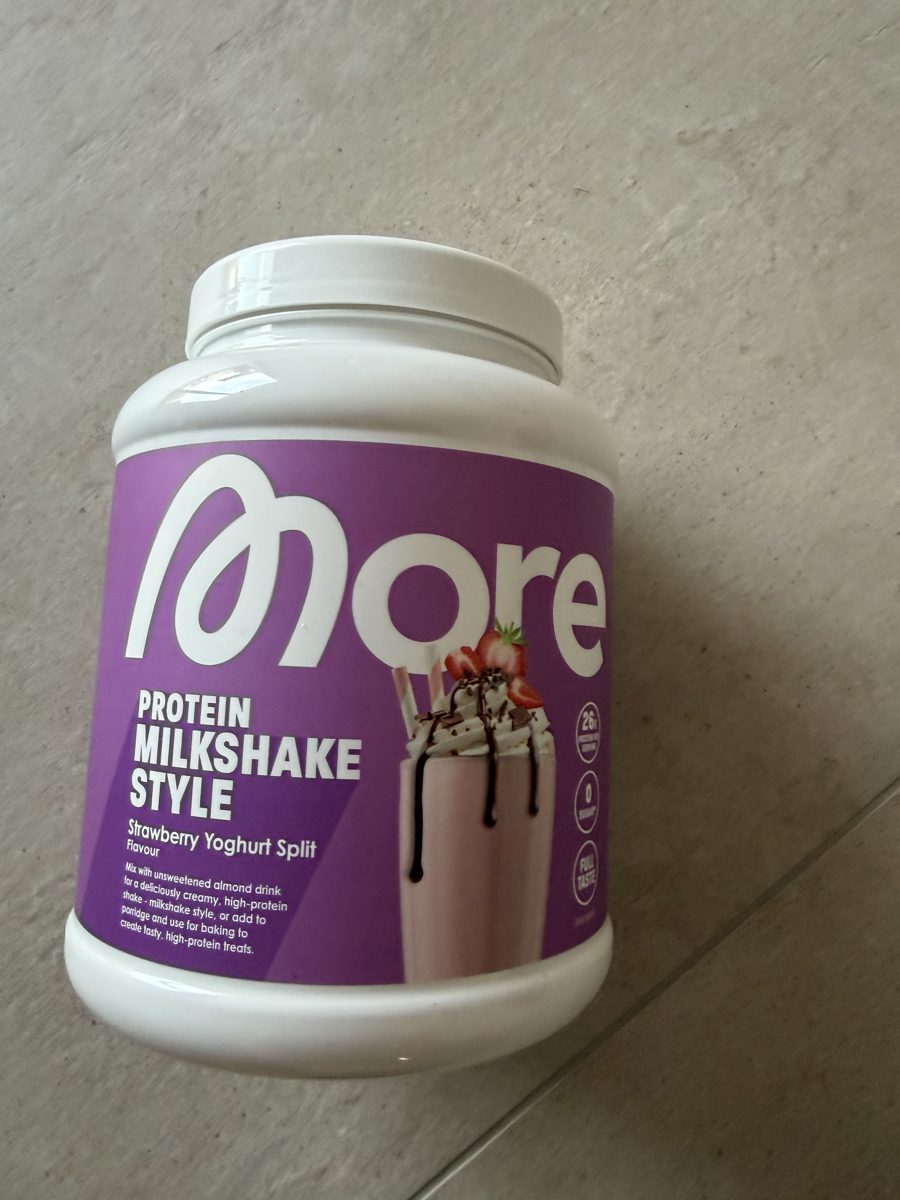
The consistency was very good. Creamy, thick, exactly what the product line promises. Nothing to criticise there.
The flavour was the disappointment. Weak. It went in the direction of a yoghurt bar, but without your being able to say precisely what you were tasting. Strawberry was there, but pale — not intense, not rounded, more a hint of strawberry than a flavour. Overall boring.
What did work: the pieces. They do not dissolve quickly, because they are real strawberry pieces. So the shake can be left standing without the texture collapsing. That is a practical advantage over the marshmallow flavour in the iced coffee, where the pieces dissolve fast and you therefore have to drink up promptly.
Our rating: 6 out of 10. Not bad, but not something we would reach for again with other flavours standing next to it.
My blood sugar course
Prepared with unsweetened almond drink, drunk in the evening, without training before or after. The last meal was several hours back; the baseline was stable at 111 mg/dL with a steady trend.
| Time | Value | Context |
|---|---|---|
| 20:43 | 111 mg/dL | before drinking, steady trend |
| 20:44 | — | note set: 3 g carbs, snack, no exercise |
| 21:23 | 130 mg/dL | 40 minutes after drinking |
| 21:30 | 133 mg/dL | peak, steady trend |
| from approx. 21:30 | — | 15-minute walk |
| 22:16 | 102 mg/dL | around 45 minutes after the peak |
The rise came to around 22 mg/dL over roughly 45 minutes. After a short walk the value then fell back to 102 mg/dL — around 30 mg/dL below the peak and thus below the starting value before the shake. All values stayed within the target range throughout.
What this means — and what it does not
A rise of around 22 mg/dL on roughly 2 g of carbohydrates cannot be explained by the carbohydrates alone. I made the same observation with the Dark Cookie Crumble, where it was more pronounced.
What comes into question : protein also triggers an insulin response and can contribute to a delayed, moderate rise via gluconeogenesis — at around 24 g of protein per portion that is not a marginal factor. On top of that, the unsweetened almond drink itself brings small amounts of carbohydrate.
What I cannot say: that the product “raises blood sugar” as a product property. This is a single-case observation (n=1) on one evening. A sound statement would need repetitions across several days.
The value of this measurement lies elsewhere: it is the first without training overlay during the rising phase. With both iced coffee flavours, exercise was running alongside, which makes those curves not directly comparable.
What the walk showed
After the peak of 133 mg/dL I went for a walk of around 15 minutes. By 22:16 the value had fallen to 102 mg/dL — around 30 mg/dL below the peak and even slightly below the starting value of 111 mg/dL before the shake.
That moderate movement increases glucose uptake into muscle and lowers post-meal values is well documented . What is interesting about this observation is the magnitude: a short walk, not a training session, more than cancelled out the entire rise.
For my everyday life this is the most practically usable insight from this test — and it has little to do with the product itself. It matches what I saw with the Dark Cookie Crumble: there the bike session did not prevent the rise but pulled it back cleanly. Two different flavours, two different forms of movement, the same pattern .
What it suits
The absence of caffeine is the real plus. A protein shake you can drink in the evening without risking your sleep has concrete value for me: poor sleep measurably worsens glucose tolerance — so a caffeinated shake late in the evening works against exactly what I am trying to achieve. For the time after a late training session or after a night call-out, a caffeine-free variant is therefore practically useful.
That is an argument via the detour of sleep, not a statement about a direct effect of the product on blood sugar.
At around 24 g of protein and 2 g of carbohydrates per portion, the ratio suits my purposes well. Only the flavour does not keep up.
What remains open
- Repeat on a second evening to see whether the course reproduces.
- Comparison with water instead of almond drink, to isolate the contribution of the preparation liquid.
- Marshmallow re-measurement under the same protocol — near-fasted, without training. Only then are the three flavours cleanly comparable. The existing marshmallow measurement had only two points across twelve minutes and may have missed a peak.
Sources
- Label information More Protein Milkshake Style Strawberry Yoghurt Split: 1583 kJ / 378 kcal, 3.6 g fat, 7.1 g carbohydrates, 80 g protein, 0.58 g salt per 100 g of powder; 20 portions per tub; preparation 30 g to 300 ml unsweetened almond drink.
- Product information from More Nutrition on the Milkshake Style line: whey protein concentrate and calcium caseinate, sweetened with sucralose and steviol glycosides, no added sugar.
- Reviews on the insulin response to protein and the contribution of gluconeogenesis with protein-rich meals.
- Reviews on the link between sleep quality, sleep duration and glucose tolerance.
- Reviews on the effect of short bouts of movement after eating on postprandial glucose.
- Manufacturer information from Abbott on the FreeStyle Libre 3: interstitial glucose measurement principle, lag versus blood glucose.
- Own CGM recording from 23 July 2026, documented via screenshot timestamps — single-case observation.