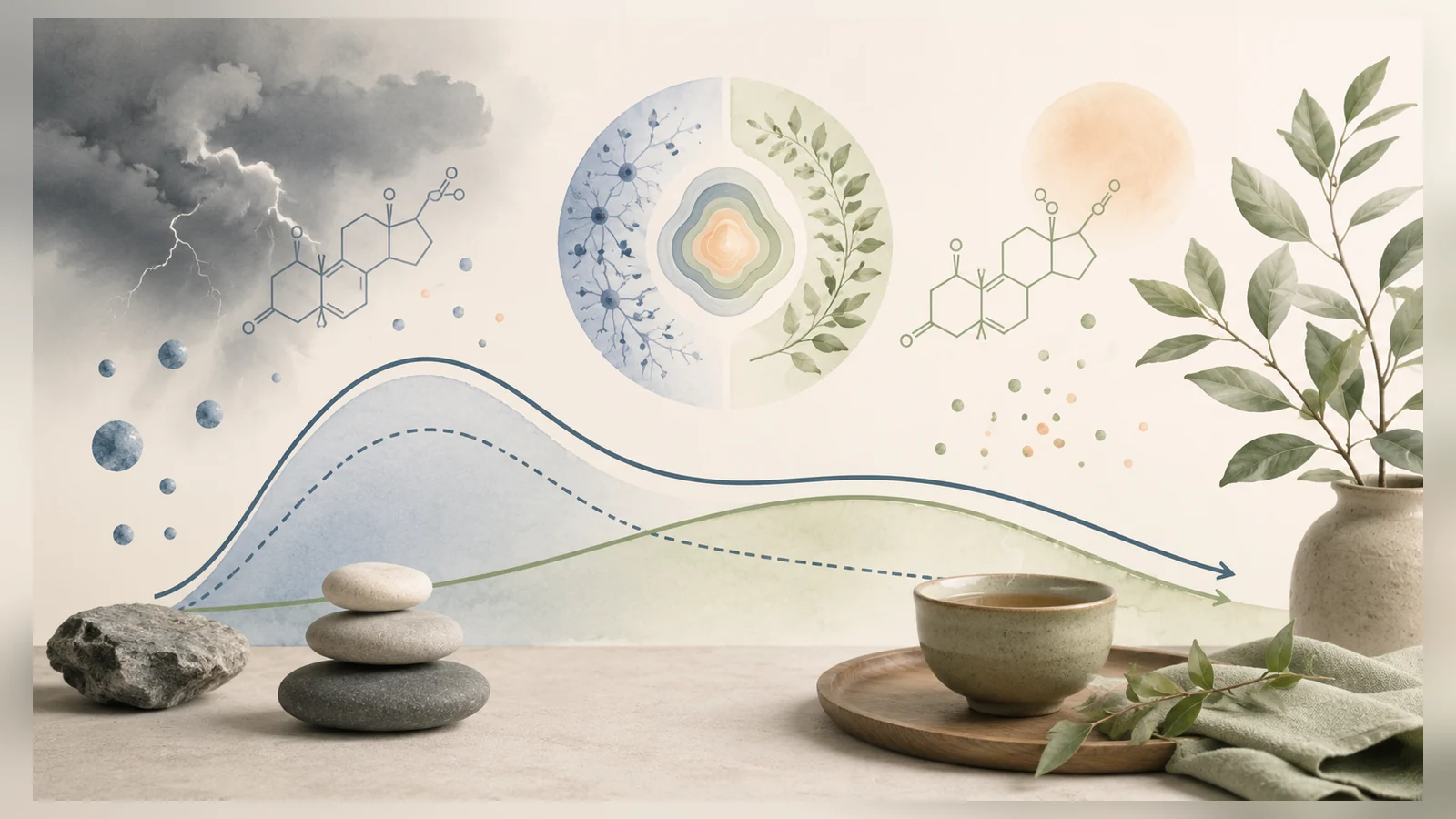
Many know the puzzle: blood sugar is high even though the meal was “harmless”. A common, often overlooked explanation is stress. It acts on glucose metabolism directly, through hormones.
How stress raises blood sugar
Under stress, the body releases cortisol and adrenaline, part of the ancient “fight-or-flight” response meant to make energy available. These hormones raise blood sugar three ways: the liver releases stored sugar, it makes new sugar via gluconeogenesis, and insulin action weakens.12
Acute and chronic
Acute stress can noticeably raise blood sugar within minutes.3 More problematic is chronic stress: if cortisol levels stay persistently elevated, it promotes insulin resistance and makes blood-sugar regulation harder in the long run.2 That explains why two people can eat the same meal and, depending on how their day went emotionally, end up with different values.
What counters it
Relaxation techniques such as deep breathing, meditation or progressive muscle relaxation can lower cortisol.3 Regular movement and good sleep also improve stress resilience and blood-sugar regulation. Some summaries report that structured stress management over several months can measurably lower HbA1c, this figure comes from secondary sources and should be interpreted with professional judgement.3
How this shows up in my data
I experience exactly this again and again during stressful firefighting call-outs: my blood sugar rises: without a single bite of food. It’s pure hormonal action: tension and strain release stress hormones, the liver puts glucose into the blood so the body is “ready to act”. For me it’s a good example that a blood-sugar spike doesn’t always have to do with the last meal.
The vicious circle with sleep
Stress and poor sleep reinforce each other: being tense means sleeping worse, and too little sleep in turn raises insulin resistance and stress susceptibility the next day. That way a stressful phase can become a self-reinforcing cycle. More on this in Sleep & blood sugar.
What helps in practice
- Movement as an outlet, even a walk breaks down stress hormones and lowers blood sugar via the muscle.
- Breathing and breaks: deliberate slow exhaling dampens the acute stress response.
- Protect sleep: fixed times so the system recovers at night.
- Set limits – chronic ongoing strain is the real metabolism killer.
Key takeaways
- Stress hormones (cortisol, adrenaline) raise blood sugar – even without food.
- Three ways: the liver releases sugar, makes new sugar, insulin action drops.
- Acute stress acts in minutes; chronic stress promotes insulin resistance.
- Breathing, meditation, movement and sleep can counter it.
- Emotional strain deserves attention and support.
Article ID: SWF-W-026Please quote this ID for corrections or additions.
Sources
Sources as of: 21 Jul 2026.
- Stress raises glucose via cortisol/adrenaline (liver output, gluconeogenesis, reduced insulin action). Overview. lupindiagnostics.com (opens in a new window)
- Chronic stress, cortisol and insulin resistance. Overview. neurolaunch.com (opens in a new window)
- Acute stress within minutes; relaxation lowers cortisol; stress management and HbA1c (secondary). Overview. doctronic.ai (opens in a new window)