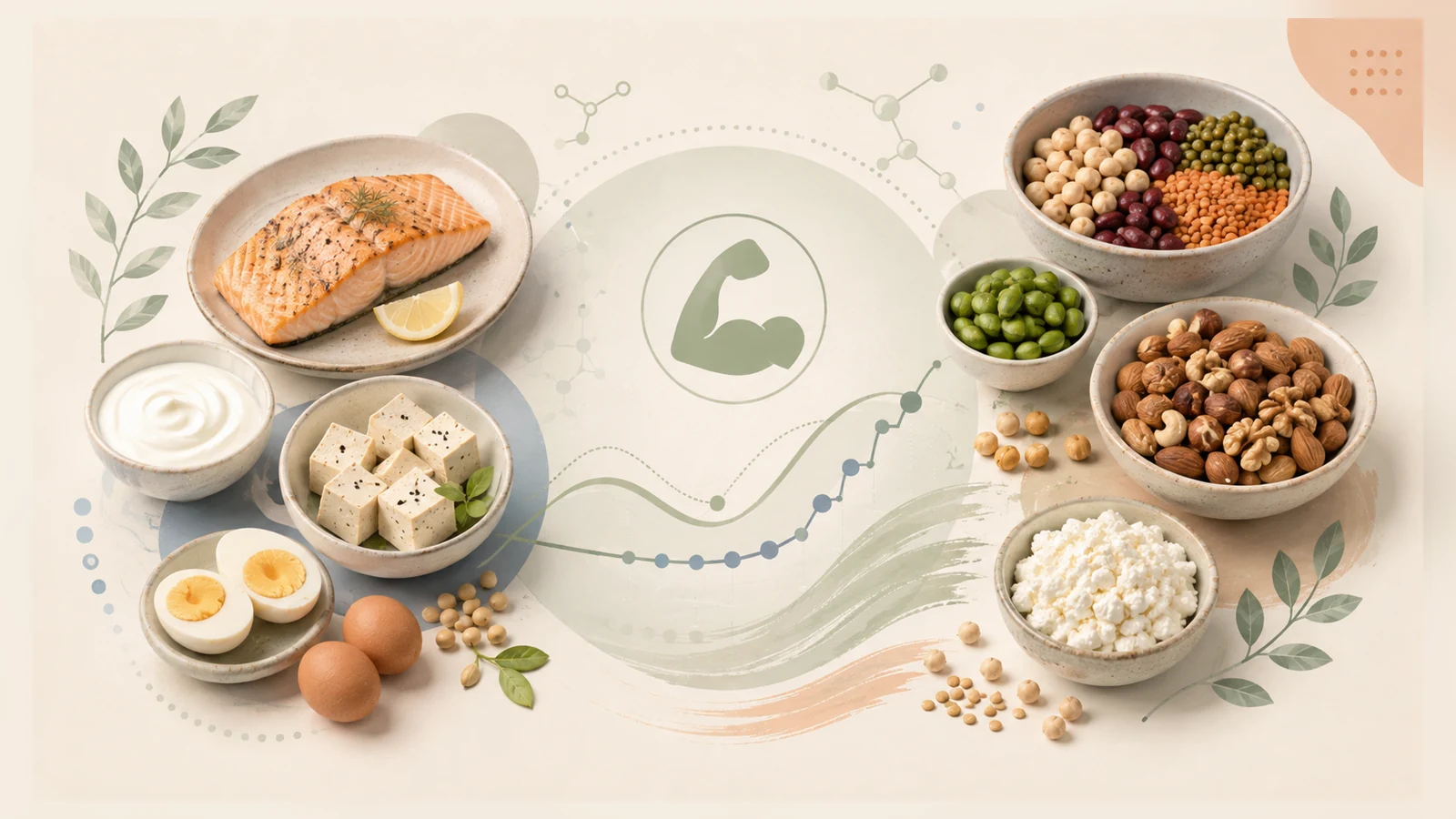
Of the three macronutrients, protein has the least direct effect on blood sugar. That surprises many, since amino acids can in theory be converted to glucose (gluconeogenesis), but in practice the body keeps this remarkably balanced.
Why protein usually barely raises blood sugar
In studies, pure protein did not cause a meaningful rise in blood sugar in people with or without type 2 diabetes.1 From 50 g of beef protein, only about 2 g of extra glucose formed over eight hours in people with type 2 diabetes.2 The reason is hepatic autoregulation: the liver balances its glucose output so blood sugar stays stable.2
Protein can even dampen the blood-sugar spike
Eaten before or together with carbohydrates, protein lowers the blood-sugar spike.3 In people with type 2 diabetes, a higher-protein diet also slightly lowered post-meal values and HbA1c.1 A side effect that counts in everyday life: protein is filling and can help manage total energy intake.
Key takeaways
- With an intact insulin response, protein barely raises blood sugar.
- From 50 g protein, only ~2 g glucose forms over 8 hours in type 2 diabetes.
- Protein before or with carbs dampens the spike.
- Protein is filling – helpful for energy balance.
- Exception: with severe insulin deficiency, a delayed rise is possible.
Article ID: SWF-W-021Please quote this ID for corrections or additions.
Sources
Sources as of: 21 Jul 2026.
- Protein intake and post-meal glucose/HbA1c in type 2 diabetes; higher-protein diets. Study. pmc.ncbi.nlm.nih.gov (opens in a new window)
- ~2 g extra glucose from 50 g protein over 8 h; hepatic autoregulation. Study. pmc.ncbi.nlm.nih.gov (opens in a new window)
- Protein before/with carbohydrates lowers the postprandial spike. Study/review. ncbi.nlm.nih.gov (opens in a new window)
- With insulin deficiency / very low carb: amino acids stimulate glucagon → gluconeogenesis → a delayed glucose rise. Diabetes Care (2025) / summary. diabetesjournals.org (opens in a new window)