Fasting blood sugar, measured in the morning before the first food, is one of the most important reference values in metabolism. Alongside HbA1c and the OGTT, it’s one of the standard diagnostic measures.
Which values apply
In people without diabetes, the fasting value is normally below 100 mg/dl. The range 100–125 mg/dl is considered prediabetes, and from 126 mg/dl (confirmed on two days) diabetes.1 For people with diabetes, the ADA often gives a target corridor of about 80–130 mg/dl: to be set individually.2
The dawn phenomenon: the morning rise
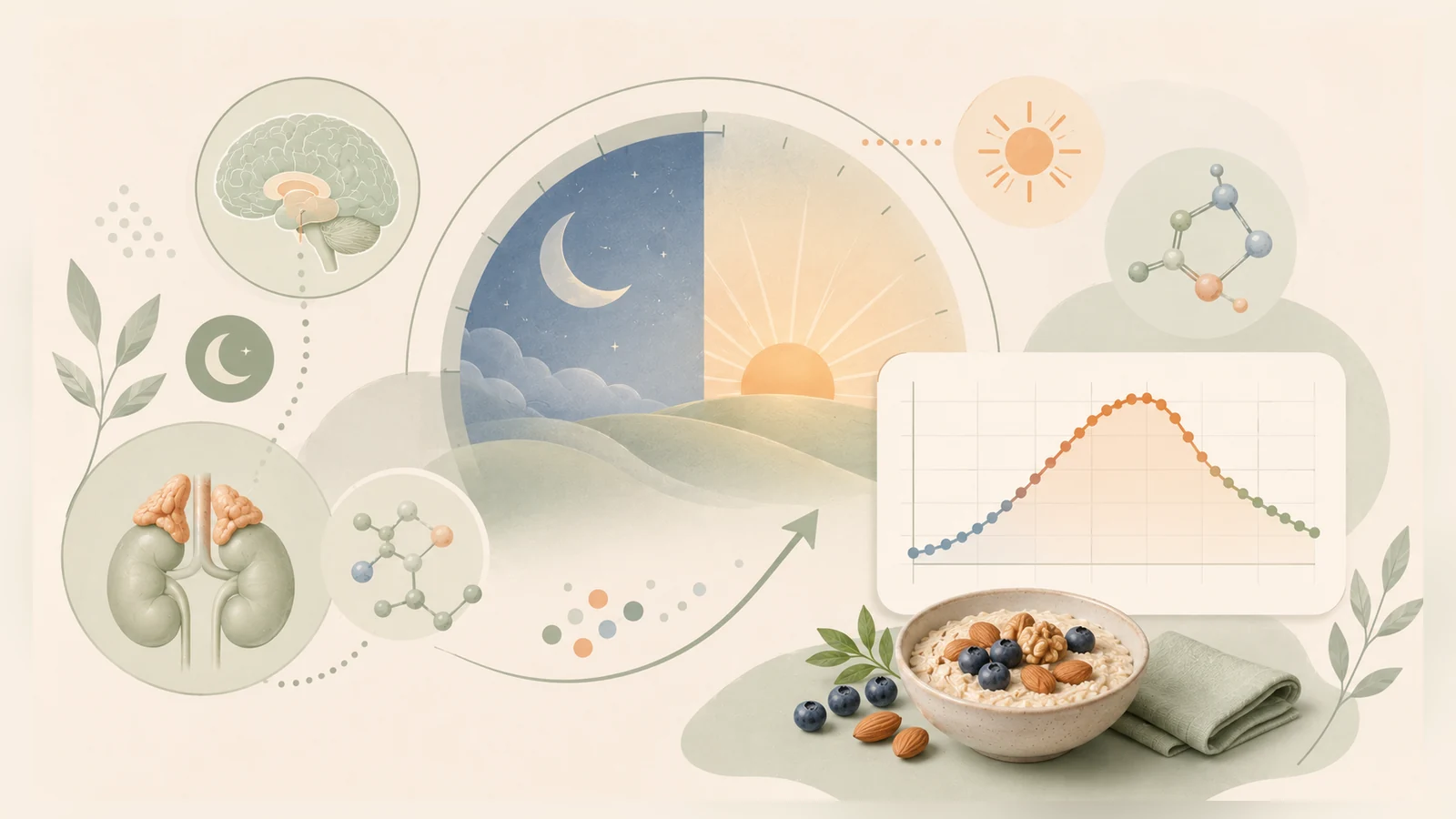
In the early morning hours, roughly between 3 and 8 a.m., the body releases more so-called counter-regulatory hormones: cortisol, growth hormone, glucagon and adrenaline.23 They prepare the body for waking, but at the same time signal the liver to release sugar into the blood and lower insulin action. With a healthy metabolism, more insulin simply offsets this rise. With insulin resistance or diabetes, this compensation is missing, and the fasting value rises.3
Don’t confuse it: the Somogyi effect
A rarer phenomenon is the Somogyi effect, in which an overnight hypoglycaemia leads to a rebound high in the morning. Because the countermeasures are opposite, the distinction matters. Medically it can be clarified with a measurement around 2–3 a.m.: if the value is low then, that points more to a Somogyi effect; if it’s already elevated, more to insufficient basal coverage.3
Key takeaways
- Fasting value: below 100 mg/dl normal, 100–125 prediabetes, from 126 (confirmed) diabetes.
- The dawn phenomenon is a natural morning rise in blood sugar driven by hormones.
- The liver releases sugar and insulin action drops: with resistance, the morning value rises.
- A rise of ≥20 mg/dl counts as significant.
- Distinguish from the rarer Somogyi effect: medically via a night-time measurement.
Article ID: SWF-W-018Please quote this ID for corrections or additions.
Sources
Sources as of: 21 Jul 2026.
- Diagnostic fasting thresholds (<100 / 100–125 / ≥126). American Diabetes Association. diabetes.org (opens in a new window)
- High morning blood glucose: dawn phenomenon vs. Somogyi; targets. American Diabetes Association. diabetes.org (opens in a new window)
- Dawn phenomenon mechanism: counter-regulatory hormones, hepatic glucose output. Review. ncbi.nlm.nih.gov (opens in a new window)
- Factors influencing the morning value: dinner timing, movement, sleep/cortisol. Summary. virtahealth.com (opens in a new window)