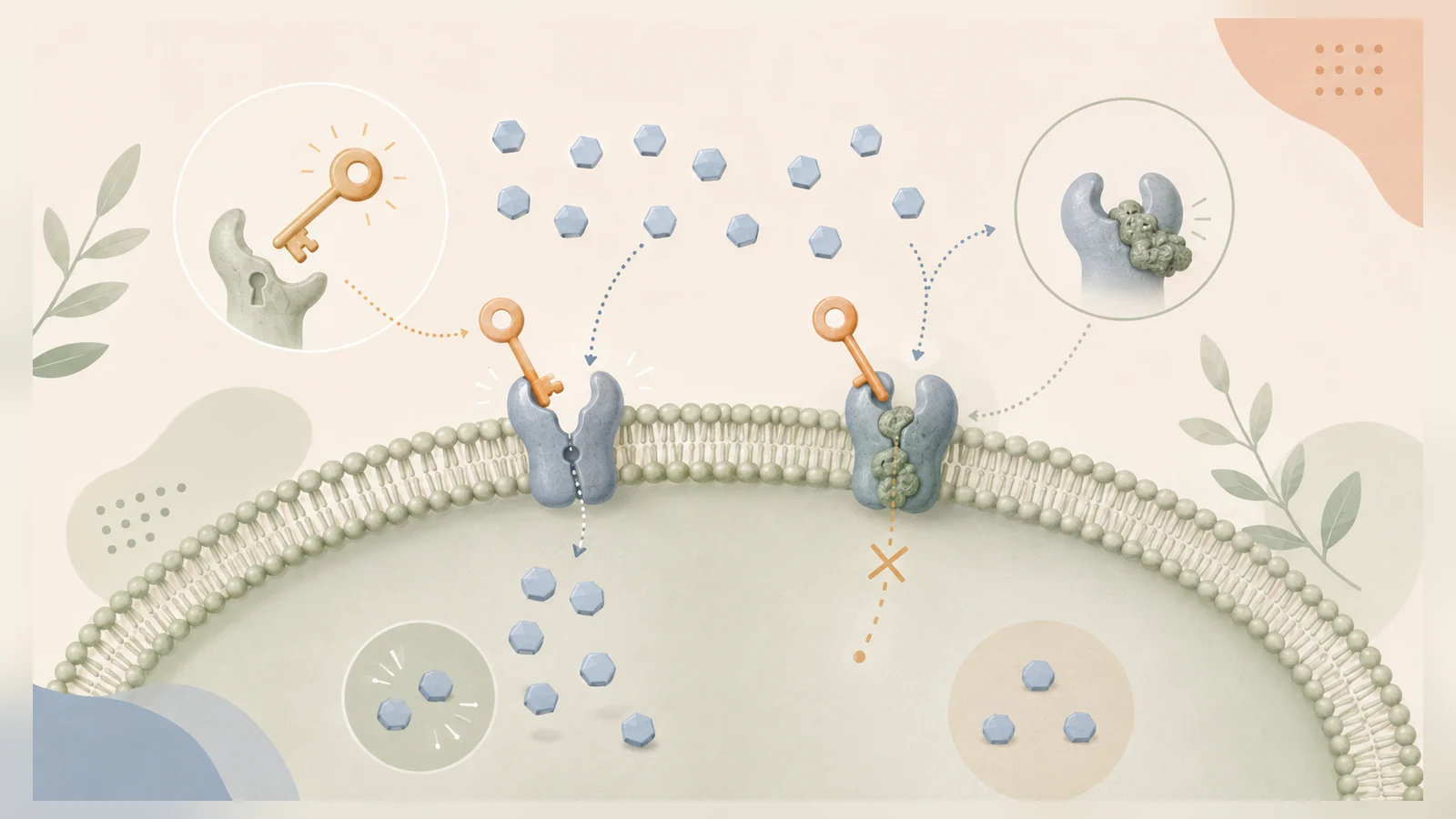
Insulin is a key metabolic hormone. After eating, it moves sugar (glucose) from the blood into cells, where it serves as energy. In insulin resistance, cells respond more weakly to this signal, the key still fits, but the lock is jammed.1
Which tissues are affected
In principle, any tissue with insulin receptors can become resistant. The three main drivers are the liver, skeletal muscle and fat tissue. When these respond less well to insulin, more sugar stays in the blood, and the body has to compensate.1
How the body compensates at first
The pancreas notices the rising blood sugar and produces more insulin. This higher insulin level (hyperinsulinaemia) offsets the resistance for a while, so blood sugar stays normal at first. Only when this extra production is no longer enough does blood sugar rise permanently.12
How to recognise insulin resistance
Insulin resistance often runs for a long time without clear symptoms. Signs can include an elevated fasting blood sugar, a rising HbA1c, increased belly fat or certain blood-lipid values. Medically, it can be estimated via the HOMA-IR (from fasting glucose and fasting insulin), among others.1
The good news: insulin sensitivity can be improved
Contrary to what many think, insulin resistance isn’t a one-way fate. The best-documented lever is movement: working muscles take up glucose via so-called GLUT-4 transporters: partly independent of insulin. Even a single training session improves insulin action.3
Losing excess weight, especially visceral belly fat, also markedly improves insulin sensitivity. In the Finnish Diabetes Prevention Study, more physical activity substantially lowered the risk of developing type 2 diabetes.45
Key takeaways
- Insulin resistance = cells respond more weakly to insulin – mainly liver, muscle, fat tissue.
- The pancreas offsets this at first with more insulin; blood sugar stays normal for a while.
- When compensation fails, blood sugar rises – type 2 diabetes can develop.
- Movement, weight loss, good sleep and a fibre-rich diet demonstrably improve insulin sensitivity.
- Muscle work lowers blood sugar partly independent of insulin.
Article ID: SWF-W-016Please quote this ID for corrections or additions.
Sources
Sources as of: 21 Jul 2026.
- Freeman AM et al.: Insulin Resistance. StatPearls, NCBI Bookshelf (2023). Definition, affected tissues (liver, muscle, fat). ncbi.nlm.nih.gov (opens in a new window)
- Cerf ME: Beta Cell Dysfunction and Insulin Resistance. Frontiers in Endocrinology (2013). Beta-cell compensation and exhaustion. pmc.ncbi.nlm.nih.gov (opens in a new window)
- Physical activity, GLUT-4 and insulin sensitivity; acute effect after a single session. Review. ncbi.nlm.nih.gov (opens in a new window)
- 8 weeks of exercise improve insulin sensitivity; visceral belly fat as a driver. Summary. healthline.com (opens in a new window)
- Finnish Diabetes Prevention Study (post-hoc): more physical activity markedly lowers diabetes risk. pmc.ncbi.nlm.nih.gov (opens in a new window)