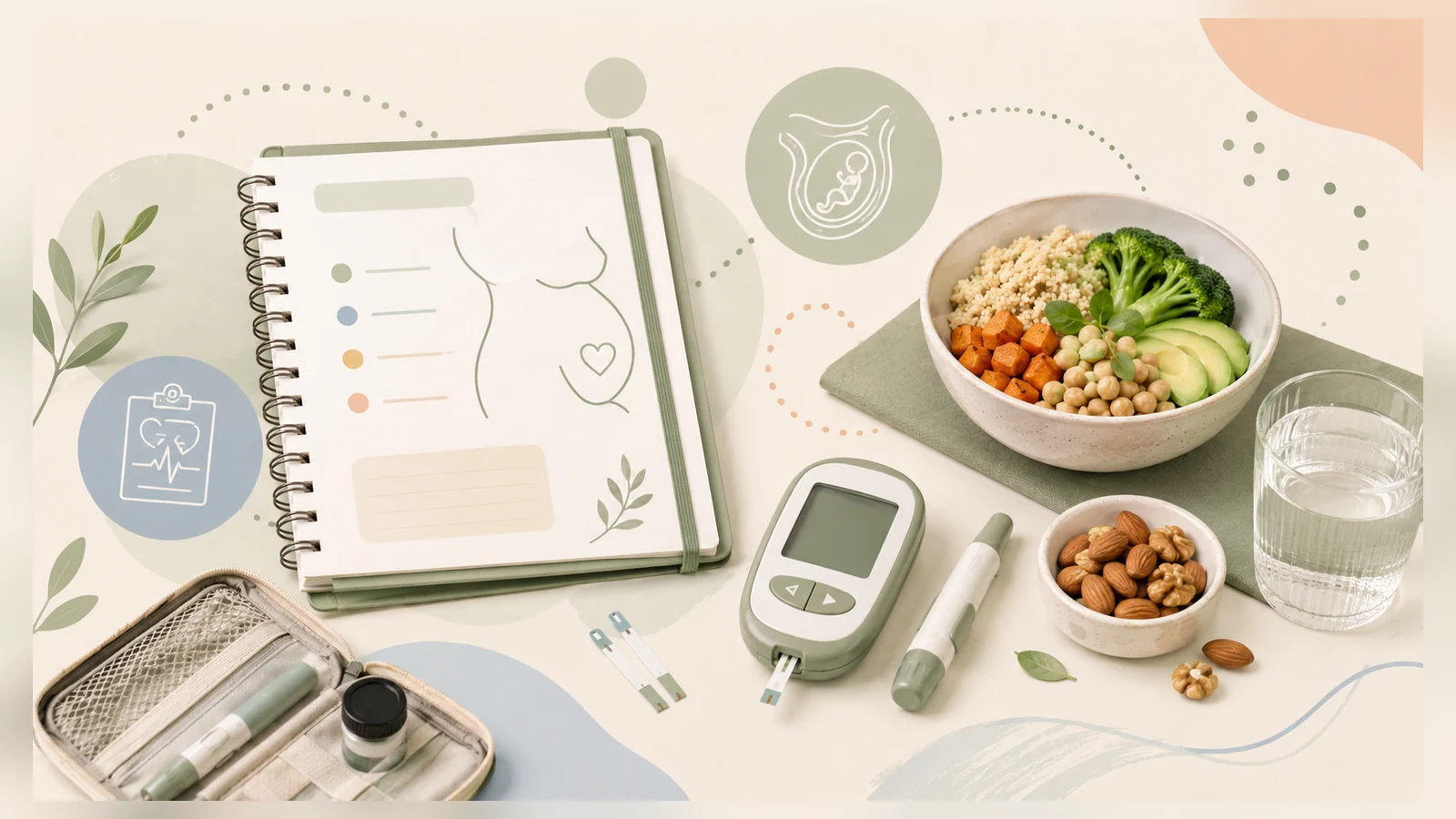
Gestational diabetes is a disturbance of glucose metabolism that appears for the first time during pregnancy. In most cases, values return to normal after the birth.
How it develops
During pregnancy the placenta produces hormones that weaken insulin’s action, a natural process that supplies the baby with nutrients. In some women the pancreas can no longer offset this growing insulin resistance, so blood sugar rises. Contributing factors include pre-pregnancy overweight, older age, family history or a previous gestational diabetes.
Detecting it: the glucose test in pregnancy
Because gestational diabetes often causes no noticeable symptoms, testing is done deliberately. Screening usually takes place between weeks 24 and 28 of pregnancy with a glucose tolerance test (OGTT). At increased risk, testing can be done earlier. For diagnosis, blood sugar is measured fasting and one and two hours after drinking the glucose solution.
Treating it: usually through diet and movement
In most women, blood sugar can be kept in the target range through an adjusted diet and regular movement alone. If that isn’t enough, insulin is used, it’s well studied in pregnancy and safe for the child. Blood sugar is self-measured regularly. The aim is to avoid larger blood-sugar spikes, to protect mother and child.
After the birth: don’t forget
Blood sugar usually normalises on its own after delivery. Aftercare matters: a repeat glucose test about 4–12 weeks after birth shows whether values have recovered. Women who had gestational diabetes have a markedly (about threefold) increased risk of developing type 2 diabetes later, regular check-ups and a healthy lifestyle help prevent this.
Key takeaways
- Gestational diabetes arises from pregnancy-related insulin resistance and usually resolves after birth.
- Screening by glucose test usually in weeks 24–28 (earlier if at risk).
- Treatment first through diet and movement, with insulin if needed.
- Aftercare test 4–12 weeks after birth; raised type 2 risk later.
Article ID: SWF-W-012Please quote this ID for corrections or additions.
Sources
Sources as of: 21 Jul 2026.
- Gestational diabetes: development, screening (weeks 24–28), treatment, aftercare. Diabinfo. diabinfo.de (opens in a new window)
- Diagnosis thresholds and management in pregnancy; postpartum retesting. ADA Standards of Care. diabetesjournals.org (opens in a new window)
- Gestational diabetes overview and later type 2 risk. IQWiG / Gesundheitsinformation. gesundheitsinformation.de (opens in a new window)