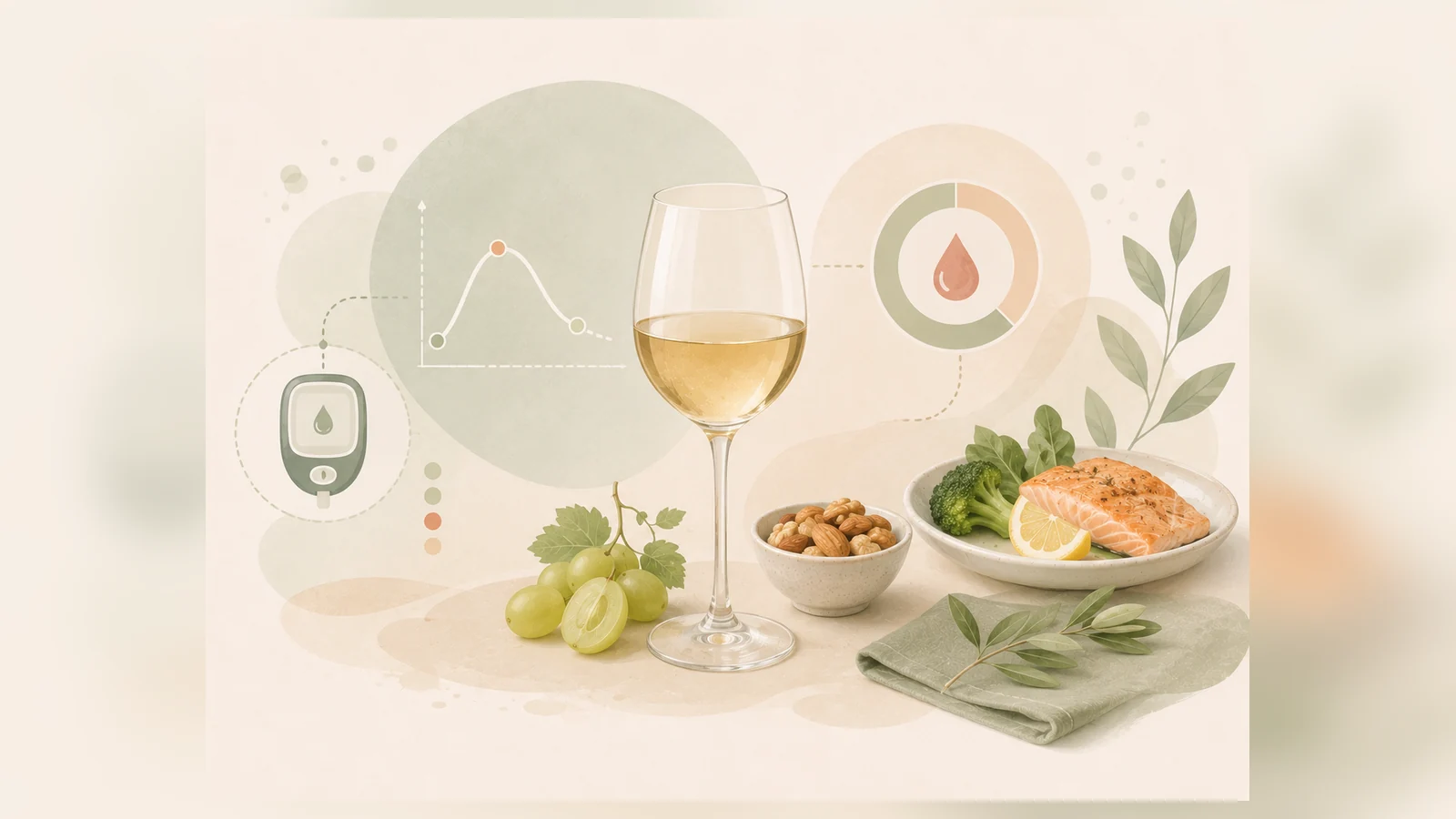
Alcohol affects blood sugar in two opposite directions. Which one dominates depends on the drink, the timing and your personal situation.
Why alcohol can lower blood sugar
The liver has two jobs that collide here: it releases sugar into the blood when needed (to keep the level stable), and it breaks down alcohol. When both happen at once, breaking down the alcohol takes priority. The liver holds back its sugar release while it’s busy with the alcohol. As a result, blood sugar can fall, especially on an empty stomach. Anyone also taking insulin or blood-sugar-lowering tablets (especially sulfonylureas) is at greater risk, because these lower sugar further while the liver is “out of action”.
The other direction: sweet drinks raise blood sugar
At the same time, many alcoholic drinks contain sugar themselves: sweet cocktails, liqueurs, mulled wine or beer can raise blood sugar at first. Dry wine or plain spirits, by contrast, contain barely any carbohydrates. In practice both effects overlap, the rise from the sugar and the later drop from breaking down the alcohol.
And in metabolically healthy people?
Someone without diabetes who eats normally usually won’t experience a dangerous hypoglycaemia from moderate alcohol: the body’s counter-regulation catches it. The lowering effect mainly becomes relevant with diabetes medications, on an empty stomach or with larger amounts. Regardless of blood sugar, alcohol is a stimulant to be used deliberately and in moderation.
Key takeaways
- Alcohol slows the liver’s sugar release: blood sugar can fall, especially when fasting.
- The hypoglycaemia can be delayed (up to 10–12 h later, including overnight).
- Insulin and sulfonylureas especially raise the risk; glucagon works less well with alcohol.
- Sweet drinks (cocktails, beer) raise blood sugar at first.
- In metabolically healthy people the lowering effect is usually small.
Article ID: SWF-W-002Please quote this ID for corrections or additions.
Sources
Sources as of: 21 Jul 2026.
- Alcohol and diabetes: delayed hypoglycaemia, interaction with insulin/sulfonylureas, sugary drinks. ADA. diabetes.org (opens in a new window)
- Alcohol, the liver and blood sugar; practical guidance. Diabinfo. diabinfo.de (opens in a new window)
- Diabetes, medications and hypoglycaemia risk. NIDDK. niddk.nih.gov (opens in a new window)