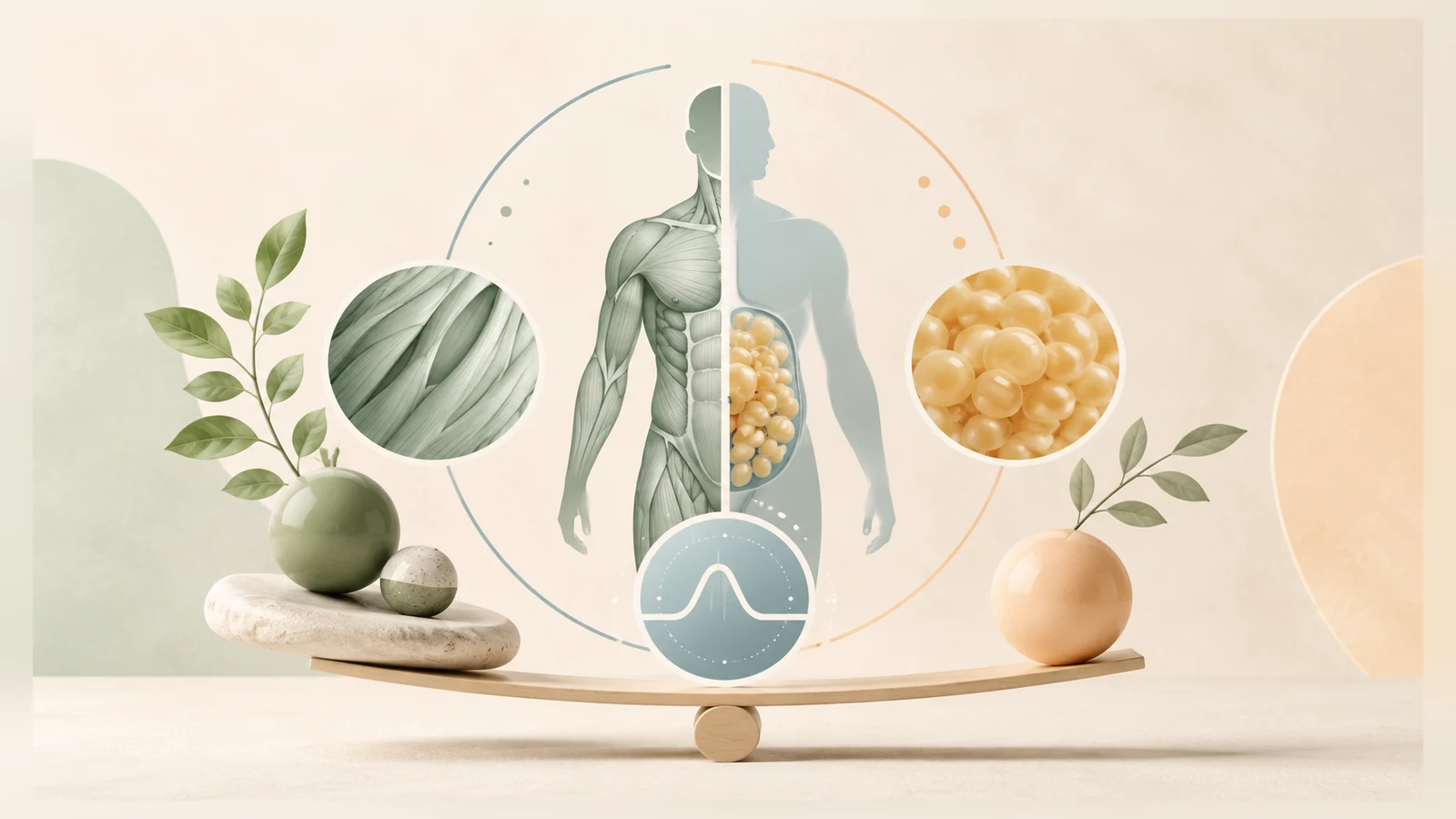
Two people with the same weight can have very different metabolic risks: depending on how the body fat is distributed. That’s why it’s worth looking beyond the scale.
Two types of fat, one important difference
Visceral fat lies deep in the abdomen between the organs. It’s metabolically active, releases pro-inflammatory messengers and is linked with a higher risk of type 2 diabetes and cardiovascular disease. Subcutaneous fat lies directly under the skin. It’s less strongly linked with these metabolic risks, but not entirely without significance, because a high total body-fat percentage also affects health.
Waist circumference as a simple guide
Because visceral fat is hard to measure directly, waist circumference serves as a practical guide. The common thresholds come from the International Diabetes Federation and the WHO and apply to European population groups: in women a circumference from 80 cm counts as raised and from 88 cm as markedly raised, in men from 94 cm and from 102 cm.1 For other ethnicities, partly lower, adjusted values apply.1 Measure in the morning, standing, roughly at the level of the navel, without pulling in.
What weight loss can do
Even a moderate weight loss is linked in guidelines and studies with favourable metabolic effects, a range of about 5–7% of body weight is often cited, above which improvements appear at group level (e.g. in blood sugar and blood pressure).2 Important: this is a statistical association from studies, not a guarantee of a specific individual risk reduction, how strong the effect is in a single person varies. It also helps that visceral belly fat is often reduced first during weight loss.
Key takeaways
- It’s not only weight that counts, but also fat distribution.
- Visceral fat (between the organs) is metabolically active and riskier; subcutaneous fat is less strongly linked but not meaningless.
- Waist circumference as a guide (IDF/WHO, European values): women 80/88 cm, men 94/102 cm.
- The BMI remains a limited but common additional value.
- Moderate weight loss (~5–7%) is linked with benefits at group level: without an individual guarantee.
Article ID: SWF-W-001Please quote this ID for corrections or additions.
Sources
Sources as of: 21 Jul 2026.
- Waist circumference thresholds (IDF/WHO) for European and other population groups; visceral fat and risk. IDF. idf.org (opens in a new window)
- Moderate weight loss (~5–7%) associated with metabolic benefits at population level. ADA Standards of Care. diabetesjournals.org (opens in a new window)
- Visceral vs. subcutaneous fat, metabolic activity and disease risk. Reference. ncbi.nlm.nih.gov (opens in a new window)